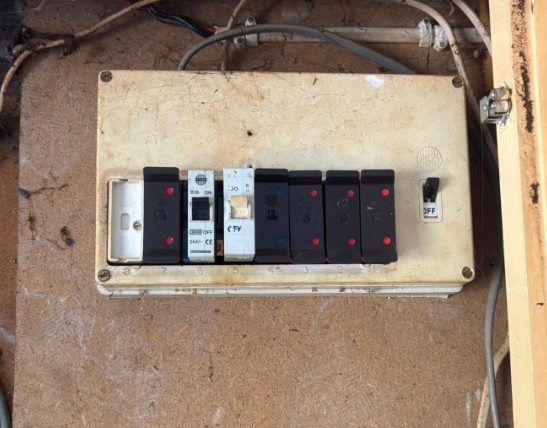
When we complete an EICR (Electrical Installation Condition Report), we most commonly find that fuse boards fail more than other electrical elements in the home. Here are the most common issues found in Brighton & Hove homes.
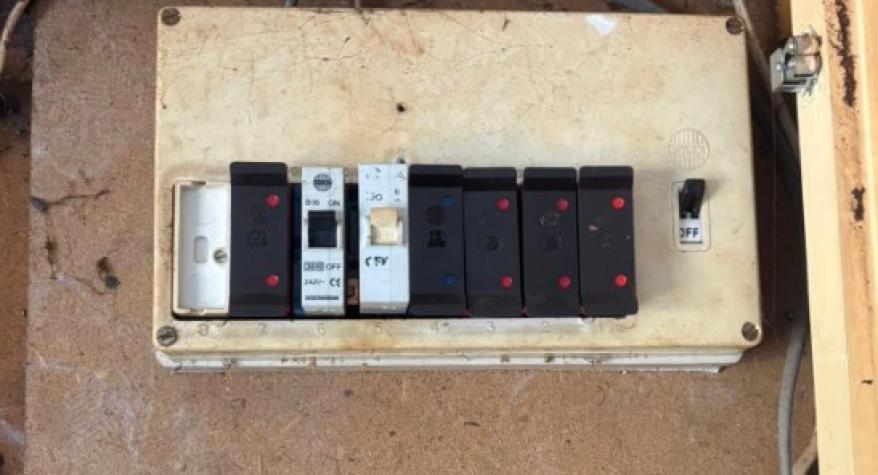
Most common reasons fuse boards fail an EICR
RS Connections were recently invited to a customer's home in the Elm Grove area of Brighton to complete an EICR. Homes in this area are generally older homes from the Victorian era spanning from the 1860s to the 1880s - as a result we usually find that the electrics in the home are older too. Due to this many homes in Brighton & Hove have older fuse boards and often require a fuse board upgrade to fix those issues.
During the EICR we discovered multiple causes for concern with the fuse board that resulted in this failing the EICR and a fuse board upgrade being completed. Below are the most common reasons for an unsatisfactory result:
- Signs of heat damage
If we find burn/scorch marks or melting on a fuseboard this means the fuse board is showing signs of overheating and isn’t currently safe and could be potentially dangerous.
- No/ little RCD (Residual Current Device) protection
It’s very common with older fuse boards that they either offer no RCD protection at all or very little - this is because they were made during a time where safety precautions weren’t as advanced as they are today. RCD’s are life saving devices that are included in modern day fuse board upgrades - they help prevent electrical shock and fire if electricity is detected to be flowing towards an unintended path, acting within milliseconds to switch off the circuit.
- Rewireable Fuses
Again, commonly found in much older fuse boards - rewireable fuse boards don’t offer you the same level of safety and protection as a modern day fuse board would. Rewireable fuses often have much slower reaction times to faults which in turn allows the heat to rise and the risk of fire to arise. A fuse board upgrade would rectify this and bring the safety up to modern day standards.
- Exposed Live Parts
If parts of the fuse board are exposed via missing plates, damage to the cover or lack of cover that means live components are touchable - this is usually cause for concern.
Is a fuse board upgrade in my Brighton & Hove home necessary?
In many cases after a failed EICR due to the fuse board, a fuse board upgrade is the next step needed to secure the safety of the home. Not only does this ensure your family and home is protected from potential electrical fires or electric shock, it also means your fuse board is able to handle the load of your home.
Older fuseboards in Brighton & Hove homes were built to handle the electrical requirements of home life that we generally don’t see today. With more homes using appliances like air fryers, electric showers, smart kitchen appliances and hot tubs, combined with many people now working from home - it simply isn’t feasible to expect an older and/or damaged fuse board to be able to keep up with this.
Many people will experience tripping electrics or a humming or buzzing sound, this is a direct sign that your fuse board needs to be upgraded to allow for your home's electrics to run smoothly and without overload.
Need to discuss a fuse board upgrade after a failed EICR?
If your Brighton home has recently failed an EICR due to the fuse board or you’re experiencing any of the above issues, RS connections are your local and experienced electricians. We are knowledgeable when it comes to older Brighton homes and we’re keen to help.
To discuss a fuse board upgrade, get in touch with the team today - we’re here to help!